Annuities & Building a Stable Retirement Income Strategy
June 11, 2026
%3Aformat(webp)&w=3840&q=75)
Key Takeaways
- Market volatility and questions around Social Security solvency have made guaranteed retirement income a bigger priority, especially for clients nearing retirement who may have less time to recover from market downturns.
- Aligning annuities with specific client needs, plus showing how they address concerns such as longevity and sequence of returns risk, bolsters client confidence and helps them stay the course.
- The most effective annuity conversations are clear and visual. Helping a client see how an annuity strengthens their plan is what builds lasting confidence in their path toward a secure financial future.
- RightCapital brings these conversations to life with visuals such as the Income Stability Percentage chart, side-by-side proposal comparisons, stress testing, and reusable Annuity Models, all in real time.
Market volatility has a way of making the phone ring. Clients see the market dropping, assume their portfolio is in danger, and turn to their financial advisors to make sense of it. The best advisors lay the groundwork long before markets plummet, building client confidence in calm moments so fear doesn't drive decisions in volatile ones. That groundwork can often include a conversation about guaranteed income and annuities.
The challenge is that annuities are nuanced, and advisors need a way to model them clearly, compare options honestly, and translate the details into something a client can actually understand. Whether you are looking to compare different annuity purchase proposals side by side or stress test potential Social Security cuts, this guide walks through key strategies to strengthen these discussions.
Matching the right annuity to the right client
Annuities are not the right fit for every client, just as every type and distribution option is not meant for every situation. Being able to evaluate the different types and distribution options is key to addressing each client's individual needs. See our guide on how annuities work.
Comparing annuity proposals side by side
%3Aformat(webp)&w=3840&q=75)
Once a few options are on the table, advisors need a way to weigh them against each other without drowning the client in illustration details. While an annuity illustration equips you with an understanding of what that product does, having a clear side-by-side financial plan comparison shows a client what each option means for their financial future.
Whether you are evaluating a Registered Index-Linked Annuity (RILA) with an income rider against a Fixed Crediting Annuity with an income rider, or weighing the impact of taking income earlier versus later in the annuity's life, the goal is the same: surface the differences in a way that supports both your analysis and the client discussion.
Using visuals to anchor client conversations
%3Aformat(webp)&w=3840&q=75)
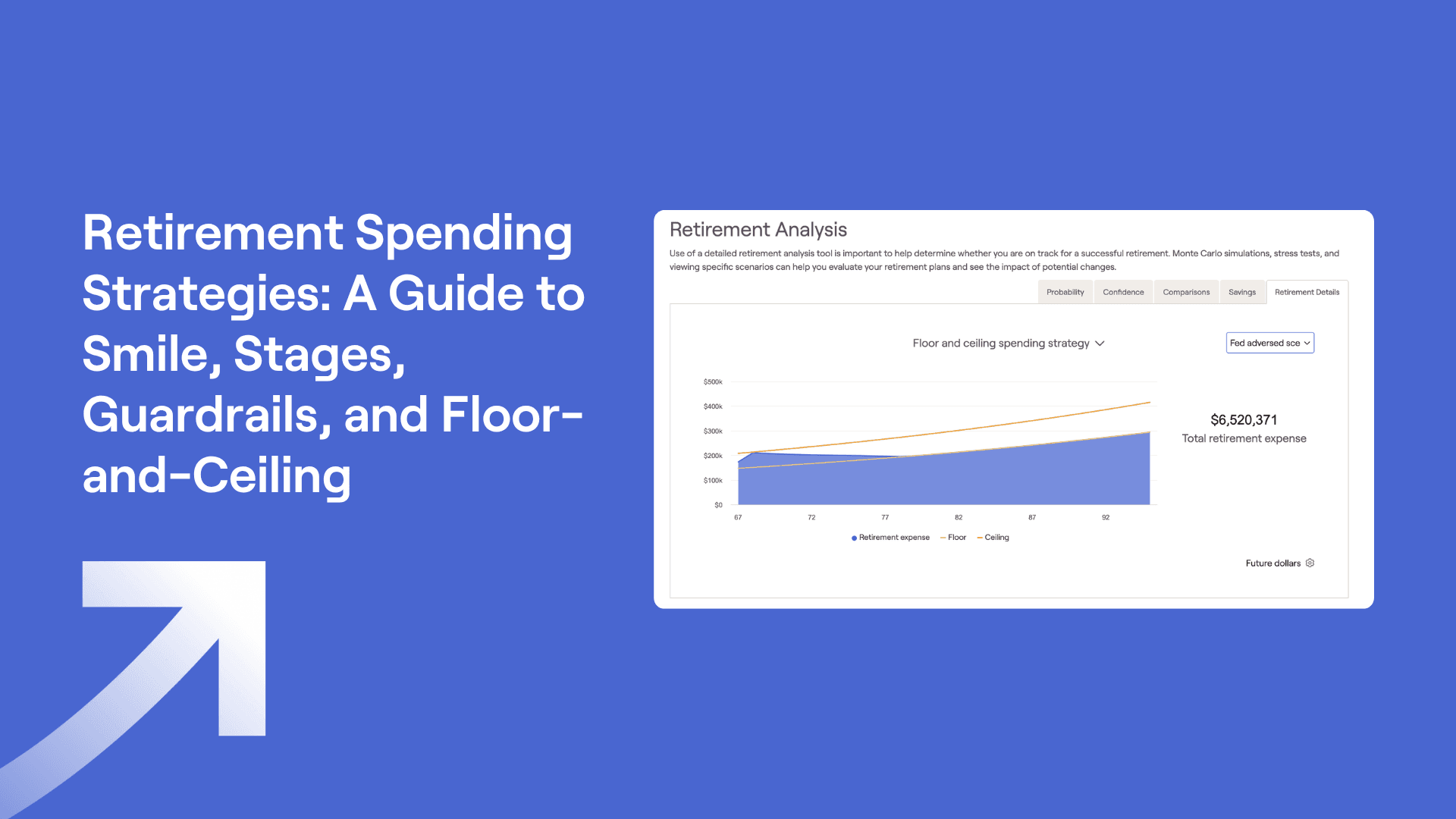
It can be hard for clients to conceptualize their current spending habits, let alone their post-retirement spending. Putting a visual in front of the client that tells the story helps put their financial future in perspective and drive home the importance of addressing retirement costs before they start. Seeing the often-overlooked expenses laid out, such as medical costs (typically Medicare) and long-term care, is often what moves a client from avoidance to action.
%3Aformat(webp)&w=3840&q=75)
%3Aformat(webp)&w=3840&q=75)
Addressing market volatility with annuities
For market-anxious clients with annuities in their plan, you have a meaningful talking point at your disposal.
The type of annuity can add another layer to this conversation. Clients with a Fixed Indexed Annuity with a floor have a built-in layer of protection. Even in a year where the index performs poorly, the annuity's value will not drop below that floor. That protection can be powerful to show a client in a review meeting. While it does not eliminate downside risk entirely, it softens the blow in a way that a traditional variable annuity or direct market investment cannot.
Being able to pull up a plan and say "here is what happens to your guaranteed income even in a flat 0% return scenario" is the kind of concrete, visual reassurance that helps clients stay the course rather than making emotion-driven reactions with their portfolio.
Stress testing Social Security reductions
%3Aformat(webp)&w=3840&q=75)
Demonstrating how a lifetime income rider works when the account value hits zero
One of the most compelling aspects of a lifetime income rider is that the income stream does not stop when the account value reaches zero. The rider guarantees income for life, calculated off of the benefit base rather than the account value. Over time, as clients take distributions, the account value will naturally decrease and can be fully depleted while the income stream continues. The insurance company, not the client’s portfolio, is responsible for those payments.
The same can be said for annuitized annuities with guaranteed income streams, as the income continues despite the balance no longer displaying in the accounts section of cash flows.
Using annuities as an accumulation tool
Annuities are often thought of as income tools, but they can also play a role in the accumulation phase. For clients who have maxed out retirement account contributions and would like additional tax-deferred growth, a non-qualified annuity can complement their existing strategy. The tax-deferred compounding can make a meaningful difference over a long accumulation period, especially for clients a decade or more from retirement. Comparing a scenario with the annuity against one without it helps the client see the incremental value over time, grounding the recommendation in their specific plan.
Saving time with repeatable annuity models
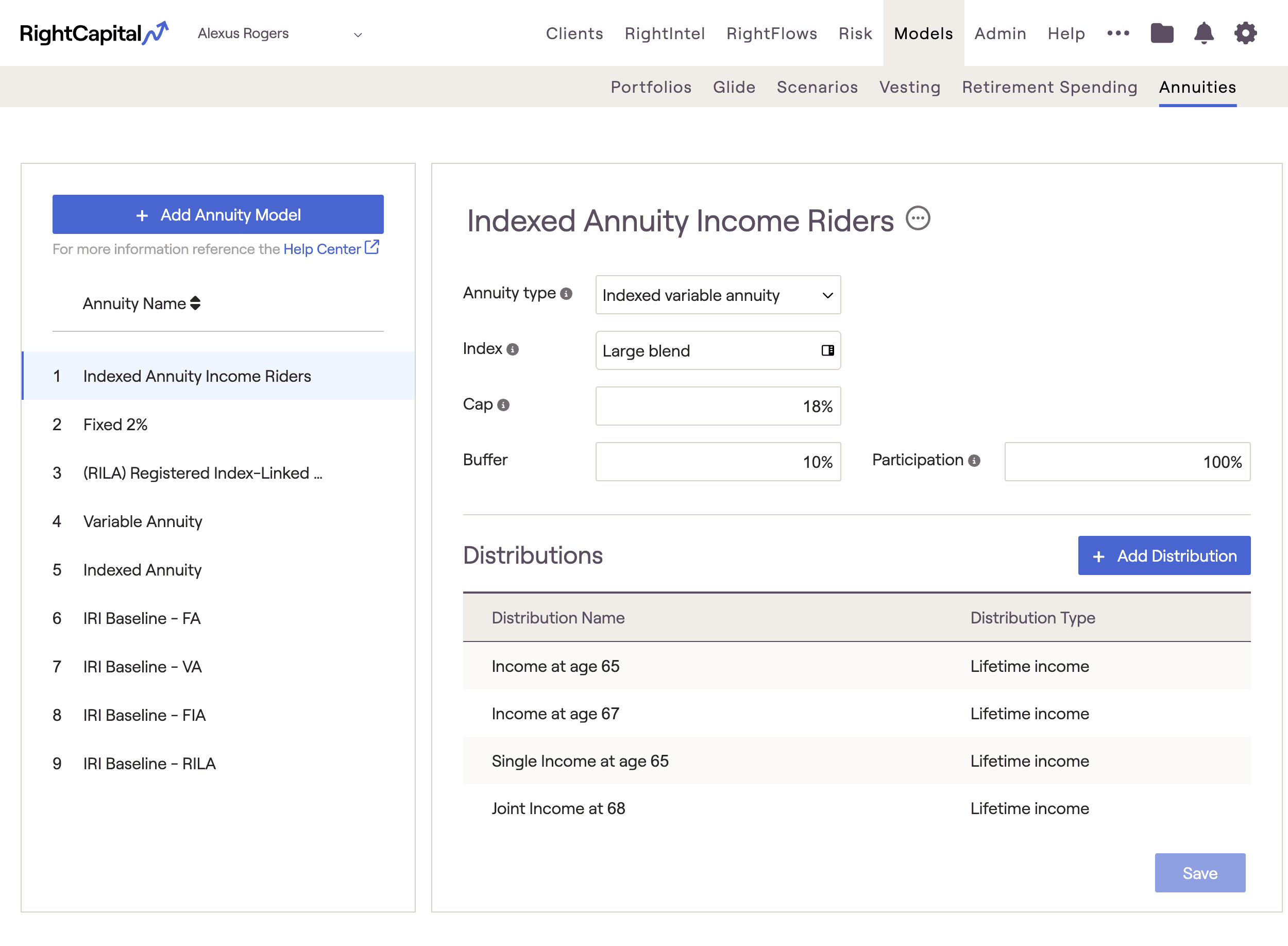
Bringing it all together in RightCapital
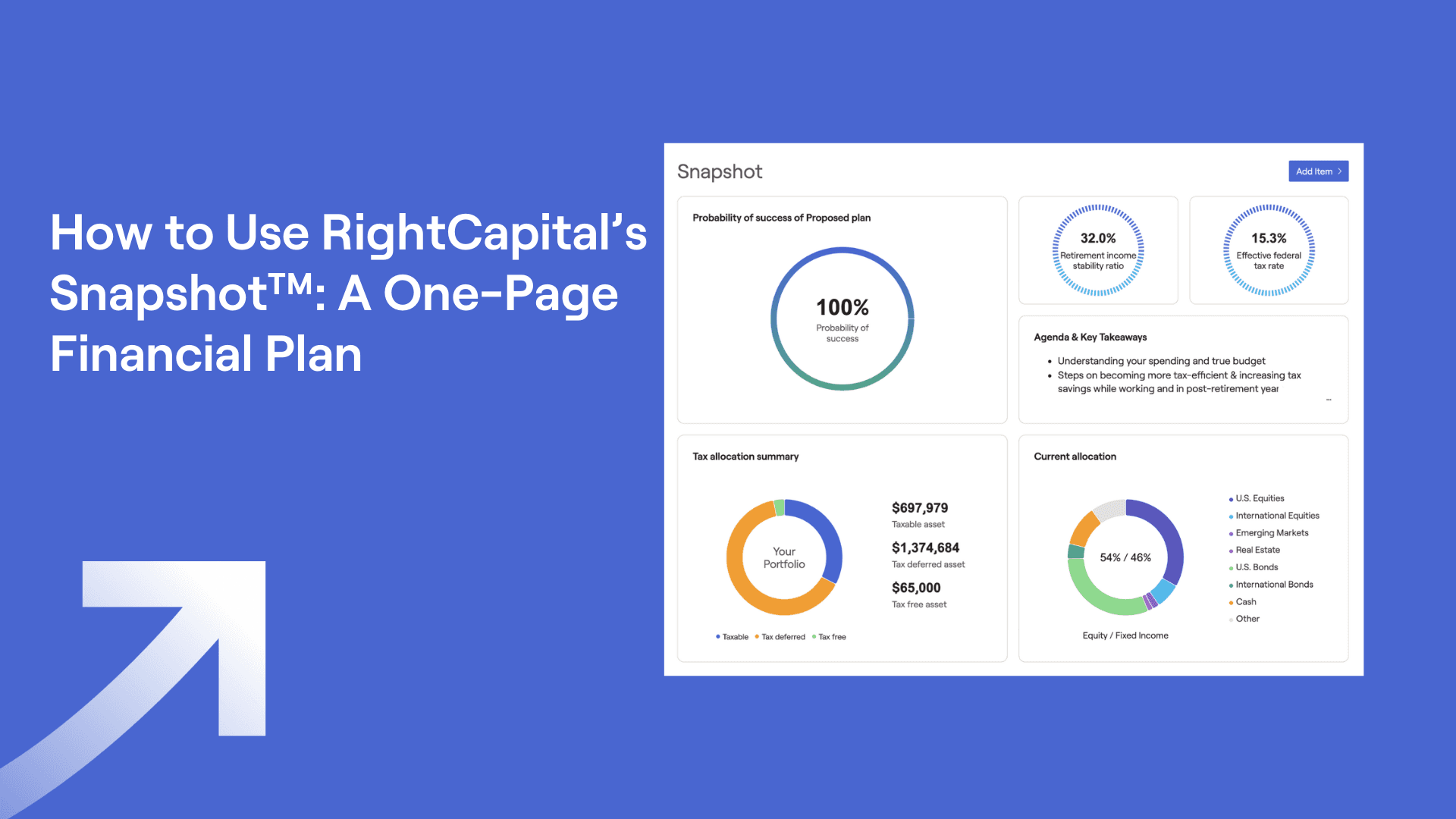
RightCapital provides tools to explore the strategies addressed in this guide, from comparing proposals side by side, anchoring conversations with the income stability percentage, stress testing Social Security cuts, illustrating how a lifetime income rider outlasts the account value, to saving reusable annuity models. The platform turns the nuance of annuities into clear, visual stories your clients can actually understand, keeping the conversation focused on what matters most: their paths towards a successful financial future.
Ready to model annuities for your clients? Book a 20-minute RightCapital demo, or start a free trial and see it in action for yourself.
%3Aformat(webp)&w=3840&q=75)
%3Aformat(webp)&w=3840&q=75)
%3Aformat(webp)&w=3840&q=75)